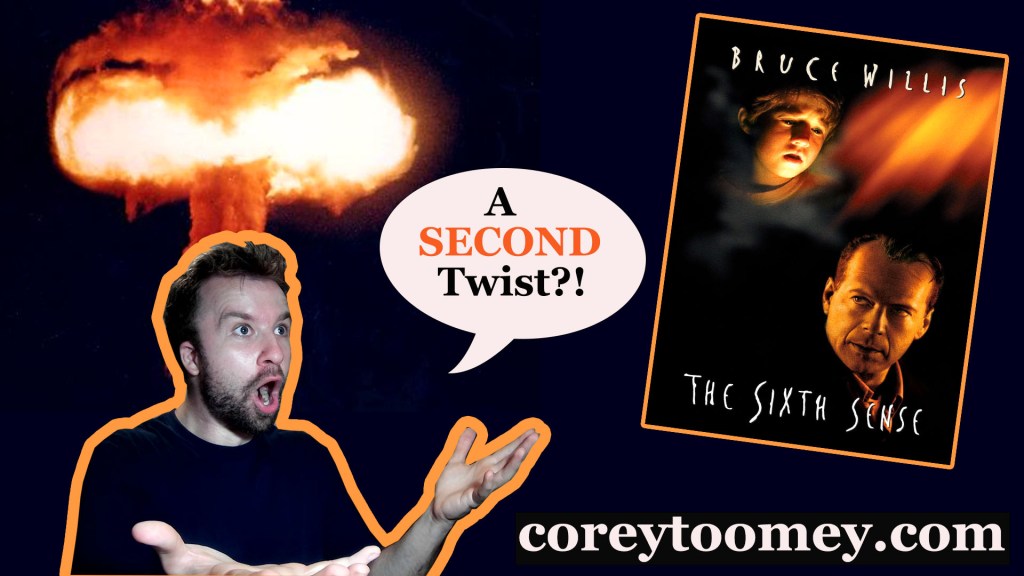
The Sixth Sense is known the world over as M. Night Shyamalan’s masterpiece. Some say his only masterpiece, but I’m not going to trash the guy. I’m not a filmmaker so what right dare I trash the Master of the Plot Twist?!
Starring Bruce Willis and Haley Joel Osment, 1999’s The Sixth Sense is the story of Malcolm Crowe, a child psychologist who vows to help Cole, a young, socially isolated boy. Cole’s issues may stem from a troubled home life, or it could be something else entirely. Something far more sinister.
Dr. Crowe is operating on a guilty conscience. His former patient broke into his home, months earlier, and shot him before turning the gun on himself.
Vincent Grey, Malcolm’s suicidal ex-patient, exhibited signs of depression and schizophrenia in his youth. Sadly, Malcolm didn’t pinpoint the exact cause of his anguish.
Several years later, Vincent was certainly the worse for wear. He didn’t get the treatment he needed and snapped on a homicidal whim.
So, that’s the synopsis. Time to spoil the movie and reveal the legendary plot twist.
Here we go.
The Famous Plot Twist
At film’s end, we discovered Malcolm was dead the entire time. On second viewing, it became apparent to us that no one, except Cole the clairvoyant, interacted with Malcolm after he got shot in the first scene.
Strikingly, Malcolm didn’t physically interact with the objects around him, either. He didn’t even open a single door. We assumed he simply did that between cuts. Turns out it wasn’t the case.
What’s more, we first thought Anna, his wife, was coldly ignoring him because their relationship was in a freefall. Again, we reevaluated her character after a second viewing.
Anna wasn’t ignoring her husband, she simply didn’t see or hear him. She was in a state of emotional limbo that widows go through. Malcolm was literally invisible to her.
…Or was he?
A Second Twist?
After recently viewing the film, and based on my understanding of its lore, I believe Shyamalan buried a second twist beneath the film’s universally-known plot twist.
I believe Anna Crowe was gifted with the power of ghost whispering, just like Cole and Vincent.
Before I go any further to state my case, I apologize in advance if Shyamalan, or any of the producers, have already addressed this. After excavating the bowels of Google and scrolling through the iMDB trivia section, I haven’t found anything related to Anna Crowe being a clairvoyant.
So, without further ado, let’s get into the theory.
The Ghost-Seer Wife Theory
I posit that Anna Crowe, Malcolm’s wife, shares the same ability to see and speak to the dead. Because Anna is a background character with minimal screen time, the hints and allusions are easy to dismiss. Viewers spend the majority of the film focusing on Cole and Malcolm and forget there are other characters who may have these abilities.
The Rules in the Sixth Sense Lore
Let’s focus on what these abilities are.
During Cole’s infamous “I see dead people” revelation to Dr. Crowe, he lists three “rules” that govern the departed.
- They don’t see each other,
- They only see what they want to see, and
- They don’t know they’re dead
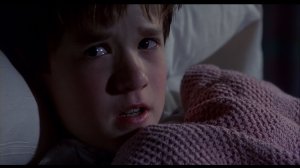
These ghosts walk the Earth seeking justice or closure. They’re oblivious to the plight of other spirits. Only living ghost-seers like Cole can see them all.
Because they’re in a state of denial about their deaths, they filter out oddities like not being able to do what normal humans can (e.g. opening doors and moving chairs).
The rules are pretty simple to understand, that is until you watch the last fifteen minutes. There seems to be an unspoken FOURTH rule that was never specified. It’s a rule that is the cornerstone of the second twist theory and adds another narrative layer to the plot.
Breaking the Rules?
During the character-defining scene in the car, Cole and his mother, Lynn, open their communication channels at long last. Cole isn’t afraid of revealing his secret to Lynn anymore. He confides in her about his conversations with his dead, unseen grandmother.
We can infer Lynn had an acrimonious relationship with her mother while she was alive, so she initially prickled at Cole’s claims. To convince her, Cole revealed information that he’d have no other way of knowing:
“She (Grandma) wanted me to tell you she saw you dance…when you were little, you and her had a fight, right before your dance recital. You thought she didn’t come see you dance…She hid in the back so you wouldn’t see. She said you were like an angel.“
Cole
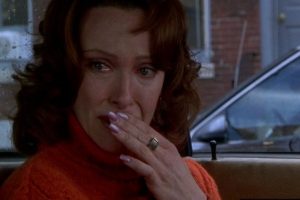
Throughout the film, Cole learns the value of helping others, both living and dead. Some people in the real world and the world of The Sixth Sense are figurative ghosts. They’re people in limbo who cannot move on from the past.
By communicating, these ghosts can enlist the help of others and, in turn, we can help them.
While the scene brought Cole’s character arc to a satisfying conclusion, it still betrayed a certain oddity. I don’t want to go so far as to call it a plot hole, because it isn’t.
The oddity lies in the next sentence Cole says about his grandmother.
“She said you came to the place where they buried her. Asked her a question? She said the answer is… “Every day”.
Cole
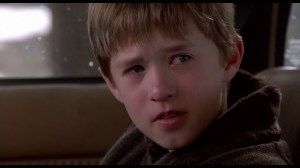
Don’t see it? Read it again. “She said you came to the place where they buried her.“
A ghost told Cole she saw her place of burial and knew it was her place of burial…The ghost knew she was dead. Further, she knew Lynn was not hearing her answer and thus asked Cole to relay it to her daughter.
These bits of information are in direct conflict with rules two and three of the film’s lore (“They see what they want to see” and “They don’t know they’re dead”).
To viewers who weren’t caught up in the emotional crescendo of Cole’s and Lynn’s character development, this scene raised a serious question: How did Cole’s grandma know that she was dead?
Fortunately, the next scene provides a coherent answer.
The Crowes and the Fourth Rule
When Malcolm finds Anna sleeping on her couch, he’s flummoxed by her muttering “Why did you leave me, Malcolm?”
“I never left you,” he replied. Suddenly, Anna drops an object that rolls across the floor and clatters at her husband’s feet. His wedding ring.
Wait, why does his wife have his ring? Why is he NOT wearing his ring? How—Why—
The revelation hits him like a tsunami. He’s been dead the whole time. His lovely wife wasn’t ignoring him, no, no. She was grieving. She didn’t acknowledge his presence simply because she couldn’t see or hear him.
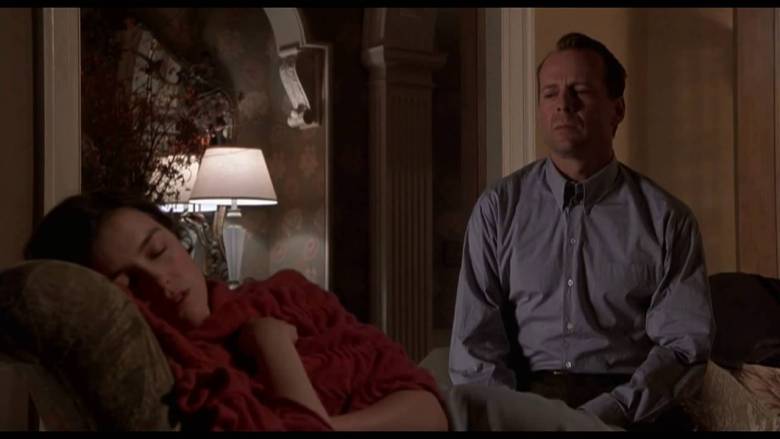
After a series of flashbacks, Malcolm comes to terms with his death and is ready to move on to the afterlife. But not before giving Anna some parting words.
“I think I can go now. Just needed to do a couple of things. I needed to help someone; I think I did. And I needed to tell you something: you were never second, ever. I love you. You sleep now. Everything will be different in the morning.”
Malcolm Crowe
Sleepily, yet strangely, Anna responds directly to him. “Good night, Malcolm.”
“Good night, sweetheart.” And the film fades to white before showing us one last glimpse of the married couple’s first kiss in holy matrimony.
Ghosts Speaking through Dreams (Fourth Rule explained)
But, wait. Hold the phone.
Did Anna directly communicate with her dead husband in her sleep? How is this possible? One may surmise that ghosts can communicate with ANYONE in their sleep. I do have a query about that, though.
Why didn’t Kyra tell her father about her mother poisoning her with pine cleaner?
Why didn’t Lynn’s mother communicate with her daughter through her sleep to fix their unresolved issues?
Instead, both ghosts had to go through Cole to relay their messages. Why?
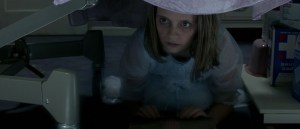
The simple answer is: Lynn and Kyra’s father did not have the ability to speak to the dead.
The unsaid fourth rule governing the dead is ghosts must first become self-aware before communicating with sleeping ghost-seers. Cole seemed to be aware of this rule when he advised Malcolm to talk to his wife in her sleep.
Anna hearing her husband’s voice in the end strongly indicates she was gifted with this unique ability, as Cole and Vincent were.
Further, the fourth rule fixes the “plot hole” of the grandmother’s ghost being self-aware.
It may also explain, symbolically, why we never see the grandmother onscreen. Maybe it’s because Cole himself never sees her, but can only hear her voice at night. The viewers only see what Malcolm and Cole see.
Anna’s Reaction to Vincent
Back to Vincent.
Donnie Wahlberg’s role was relegated to a two-minute cameo. It goes without saying his role had a fundamental impact on the film at large. Vincent’s actions pushed Malcolm to help Cole and ease his guilty conscience before spiriting away.
In two minutes of screen time, Vincent not only spurred crucial development for Dr. Crowe, he unexpectedly revealed crucial information about Crowe’s wife.
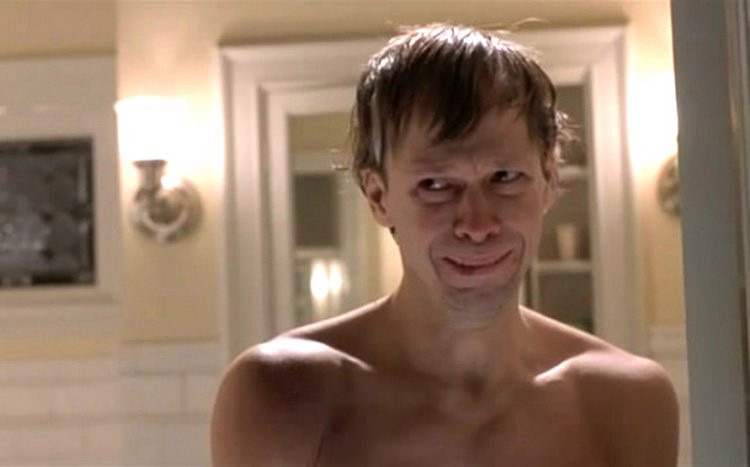
Reaction Shot – “Do You Know Why You’re Afraid When You’re Alone?”
Recall Vincent’s most unsettling line – “Do you know why you’re afraid when you’re alone? I do.”
It was established that Vincent Grey had the same powers Cole did. The reason they were troubled youths is they constantly saw and experienced horrors not meant for the living. Malcolm didn’t give Vincent the correct diagnosis and the latter’s condition deteriorated as a result.
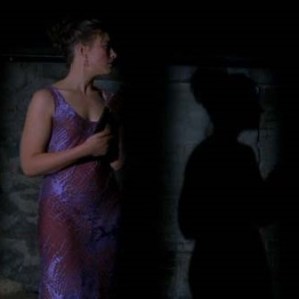
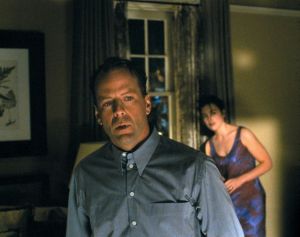
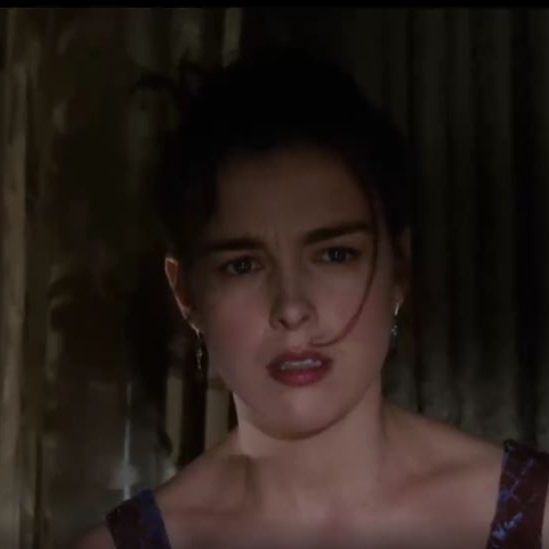
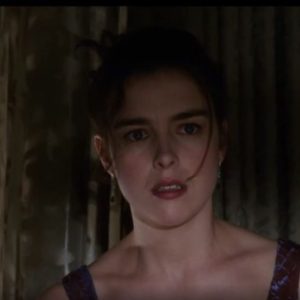
Now, this is a blink-and-you’ll-miss-it piece of storytelling, so bear with me. This sequence occurs during the 8:08-8:14 mark. As Vincent says his infamous line, he makes direct eye contact with Anna. As he’s talking, it cuts to a reaction shot of her face.
In filmography, a reaction shot is a basic, yet essential, technique. It shows a character’s facial reaction to something being said or happening offscreen. The purpose is to visually relay information about said character making the reaction.
Hollywood Pictures. 1999.
Hollywood Pictures. 1999.
In Anna’s case, her reaction to what Vincent said was quite striking.
At first, her eyebrows furrowed in confusion before her eyes widened in shock and horror. Was she shocked because of the “chill” she got in the wine cellar during the opening scene?
Did she subtly realize that Vincent was probably down there with her?
Sorry, but I have to take that with a pinch of salt. Vincent actually entered the house through their bedroom window, and the position of the glass shards showed it was broken from the outside. He also appeared and shot Malcolm in the same room he broke in from. It’s unlikely he was anywhere near the cellar.
Mise-en-scène
Why did the film show Anna’s moment of subtle shock?
Remember, this is a Hollywood film. Directors are very punctilious about what they show in every scene. This is true of M. Night Shyamalan, especially in The Sixth Sense. He paid extra attention to the visual details to prepare us for the “dead psychologist” twist.
For instance, when Cole told Malcolm that he can see dead people, his eyes subtly dart to his psychologist’s bullet wound. The mise-en-scène, or scene arrangement, shows us the story beyond what is being said. Nothing shown in this film was a random mistake or coincidence.
I may have an explanation for Anna’s mysterious reaction to Vincent’s question, and it’s bolstered by what we’ve been discussing!
Ready? Here goes: Anna knew precisely what Vincent was referring to. She knew about Vincent’s condition because she had it, too.
Wife a Former Patient?
If Anna had the same condition as Vincent, and her husband was a psychiatrist, does this mean she was one of Malcolm’s former patients?
Did Malcolm somehow alleviate her suffering despite Anna not providing explicit details of seeing ghosts? When Malcolm first dealt with Cole, ghost whispering was an entirely new phenomenon to him.
Having said that, it’s important to remember that he and Vincent also went through sessions without so much a mention of ghosts. It’s not a stretch to say he treated Anna without these two discussing ghosts, either. Let’s also consider that therapists having relationships with former patients has happened before.
After all, you’re sharing intimate details about yourself with somebody while warming up to their presence, why wouldn’t you feel a romantic connection with them? It’s bound to happen for some, no?

(Re)reevaluating Anna Crowe
During our first viewing, we assumed Anna was cold and distant towards her husband. We loathed her for it. But after the first twist was revealed, we retroactively forgave her. She wasn’t ignoring Malcolm, we told ourselves, she was simply oblivious to his presence. Or so we thought.
If we accept the “twist beneath the twist,” we’d have to once again reevaluate her actions. We can infer Anna had a more numb, blasé, and even down-to-earth approach to her abilities compared to Cole and Vincent.
If Anna truly saw the dead and truly saw her husband after his death, we’d have to accept that she really was a distant wife. Was Anna truly heartless?
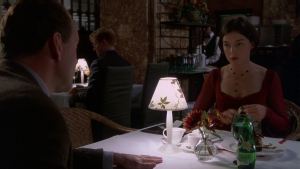
Coping with an Infirm Spouse
Really, I don’t think it’s that simple. There are plenty of nuances to consider. Remember the third rule, that these ghosts “see what they want to see.”
What do you think life was like with Malcom’s ghost after his death? He didn’t acknowledge the end of his life until “the next Fall,” according to on-screen text. It’s possible Malcolm conveniently ignored and “forgot” his wife trying to tell him about his passing.

Think of it this way. Dementia and Alzheimer’s are terrible diseases that slowly rob you of your memory and neurological functions. It’s traumatizing, not only for patients, but their families as well.
Your former self slowly withers away, and you and your loved ones know the worst is coming. In essence, Anna was dealing with an invisible dementia patient inside her own home. She didn’t have a choice but to put up a literal barrier to save herself from further pain.
Could that be the reason she barricaded the red-knobbed door to the cellar, i.e. her ghostly husband’s workplace? Anna knew he had a job to do before moving on. She didn’t want to distract him from his work by accidentally going down for a sip of wine.
Disappointment in her Husband
Was Anna really indifferent towards Malcolm? Maybe she was. But what if this indifference was rooted in his indifference towards Vincent? What if Anna was disappointed in Malcolm for not taking his professional duties seriously?
What if she wanted Malcolm to own up to his mistakes and focus his energies on helping those in need, instead of trying in vain to get her attention?
After Malcolm came to terms with his death and accomplished what he set out to do, Anna was at peace. She finally saw her husband take his profession seriously in the same way he took Anna’s condition seriously as they fell in love.
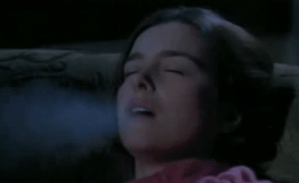
“Good night, Malcolm,” she whispered happily, huffing out a cold breath.
Cold Breath
One last detail before we wrap up.
Anna and Cole were the only characters shown to exhale a foggy breath in the presence of ghosts. It was established that ghosts can lower room temperatures by simply being there.
I’m not sure if Anna’s breath in the last scene meant anything. The fog could’ve been a Danny Phantom-style “ghost sense,” who knows? But the phenomenon was inconsistent throughout and, therefore, isn’t worth using as “evidence.”
A scene showed Lynn shivering while having dinner with her son. Malcolm acknowledged getting the “chill” when Cole told him about it. But could that have been a psychologist simply validating his patient’s feelings?
When the ghosts opened up the drawers and cabinets during the breakfast scene, why didn’t Lynn or Cole shiver? Why didn’t Cole clatter his teeth when getting near the closet at the top of the staircase at the party?
Sure, Vincent noted feeling cold in one of Malcolm’s tapes, but like I said, the “rule” doesn’t have much consistency and the film doesn’t provide clarity. Still interesting enough to mention, nonetheless.
The Shyamalan-Verse
It isn’t beyond Shyamalan’s ability or inclination to plant subtle details to use for further installments. He already introduced Kevin Wendell Crumb to us fifteen years before Split!
Remember the scene in Unbreakable when David Dunn bumped into a mother and her son, before hearing multiple voices?

Yup, that was the same villain, with dissociative identity disorder, who showed up a decade-and-a-half later! Maybe Shyamalan has/had plans with Anna Crowe showcasing her clairvoyance. Or maybe he doesn’t. But I wouldn’t put it past him.
Regardless of his intentions, I feel this theory adds a nice layer of complexity to an already beautiful and well-written story. It’s the theory of a twist…beneath a twist!
Thanks for reading! Did this theory intrigue you? Or am I just full of it? Leave a comment!😀


 Coretoom
Leave a reply to tania henderson Cancel reply